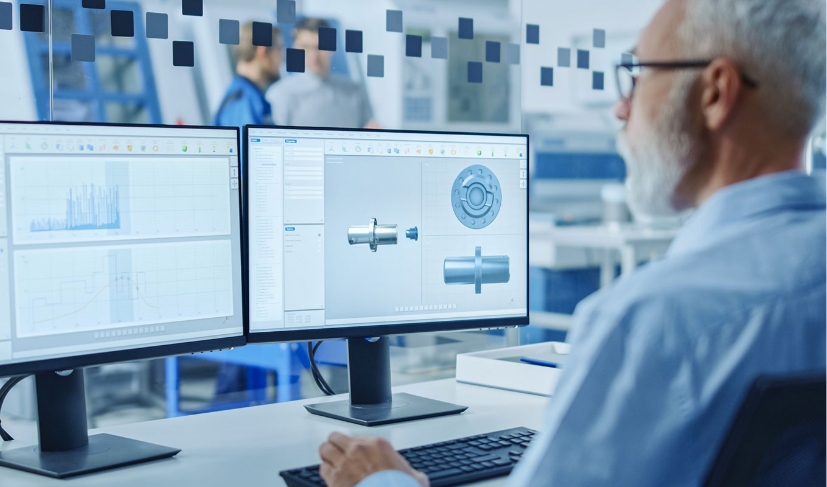
Full power, high acceleration and maximum repeatability: MACCON stepper motors for highly precise positioning tasks.
Stepper motors are ideal for precise positioning tasks and offer high repeatability. They reach full performance within a very short time and accelerate without significant delay. Even when de-energized, they reliably maintain their position and can be controlled precisely without an encoder.
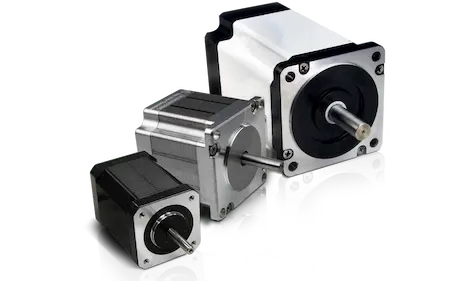
We offer a broad portfolio of different stepper motors in a wide range of frame sizes.
What Is a Stepper Motor?
A stepper motor moves its rotor in discrete individual steps along a circular path. By specifically switching the stator windings on and off, the rotor can be precisely controlled to defined positions. This fundamentally distinguishes stepper motors from conventional electric motors, which rotate continuously.
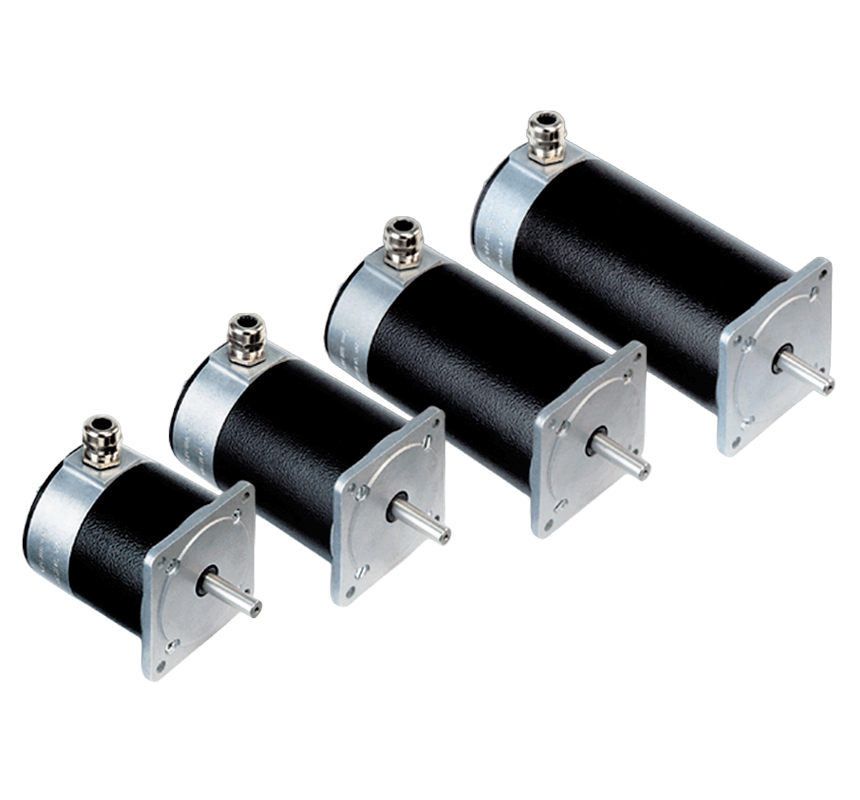
STÖGRA Standard Motors
All standard motors from our manufacturing partner STÖGRA are 2-phase 1.8° hybrid stepper motors. From a wide variety of stepper motors in different frame sizes and performance classes, customers can select the optimum stepper motor for their application.
Key Features
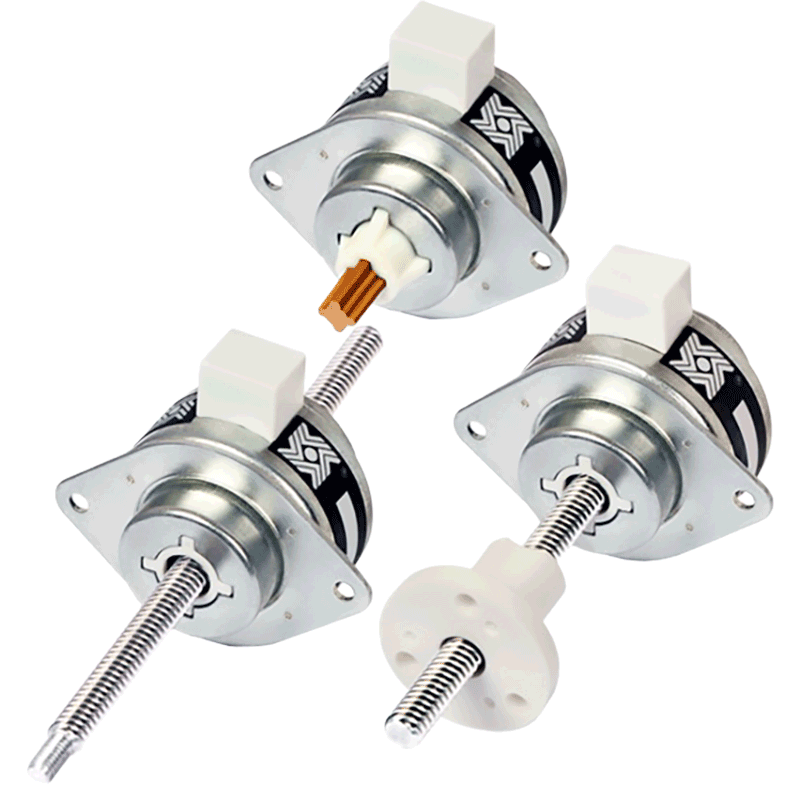
Hybrid stepper motor linear actuators are a unique product line that opens up new possibilities for device developers who require high performance and exceptional durability in a very compact package.
The various patent-pending designs use a special manufacturing process with engineering thermoplastics in the rotor drive nut and a stainless steel trapezoidal lead screw. As a result, the linear actuator is much quieter, more efficient and more durable than designs using V-threads and bronze nuts, which are commonly used in other linear actuators.
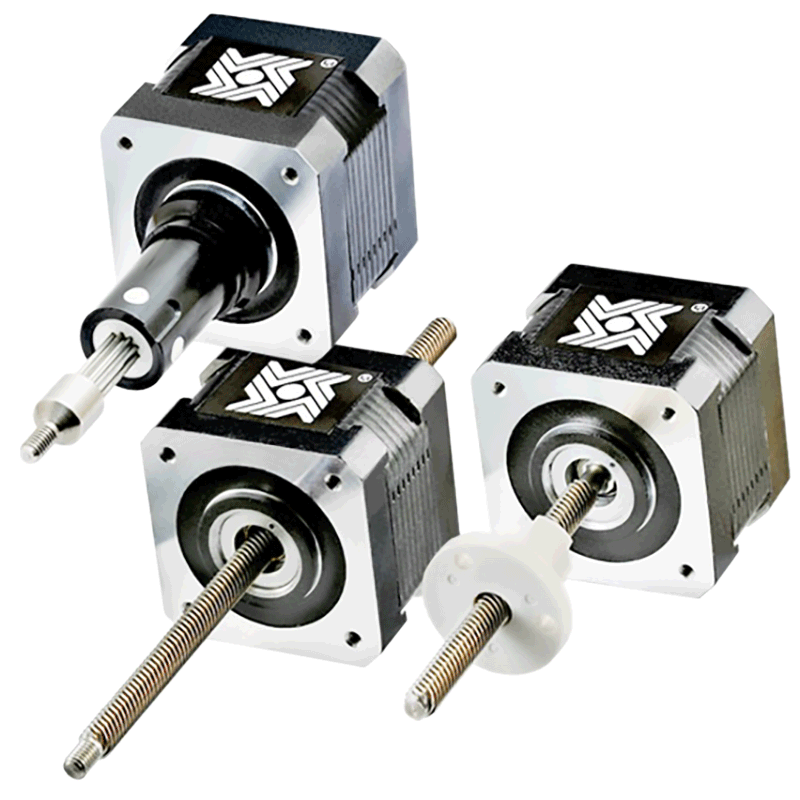
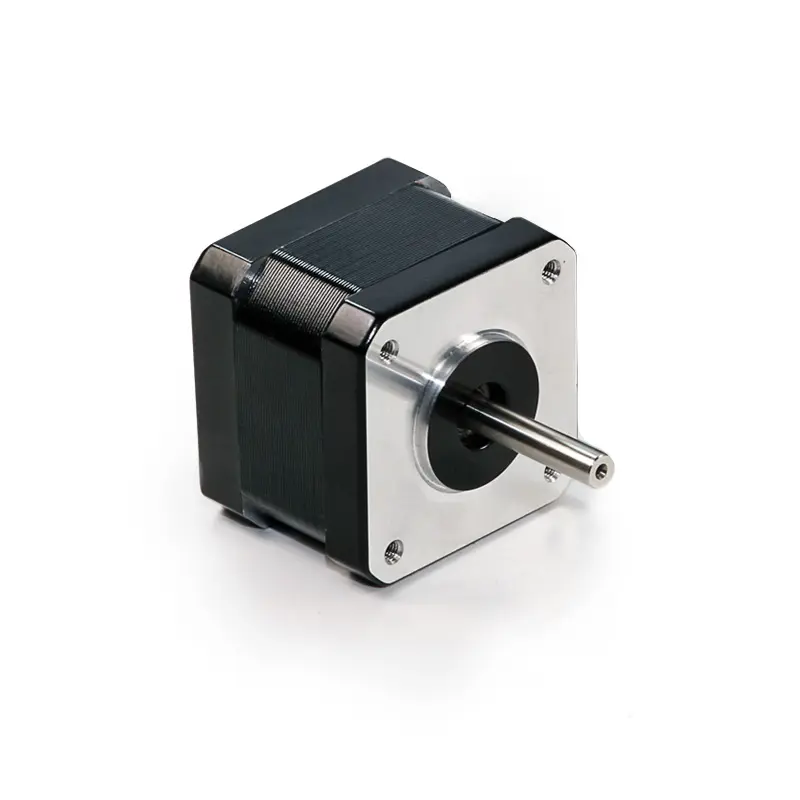
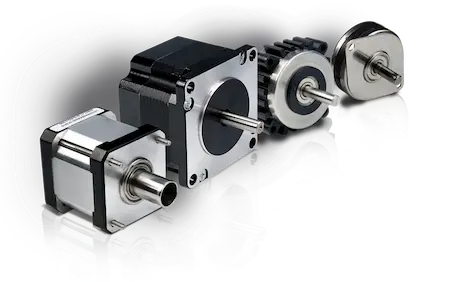
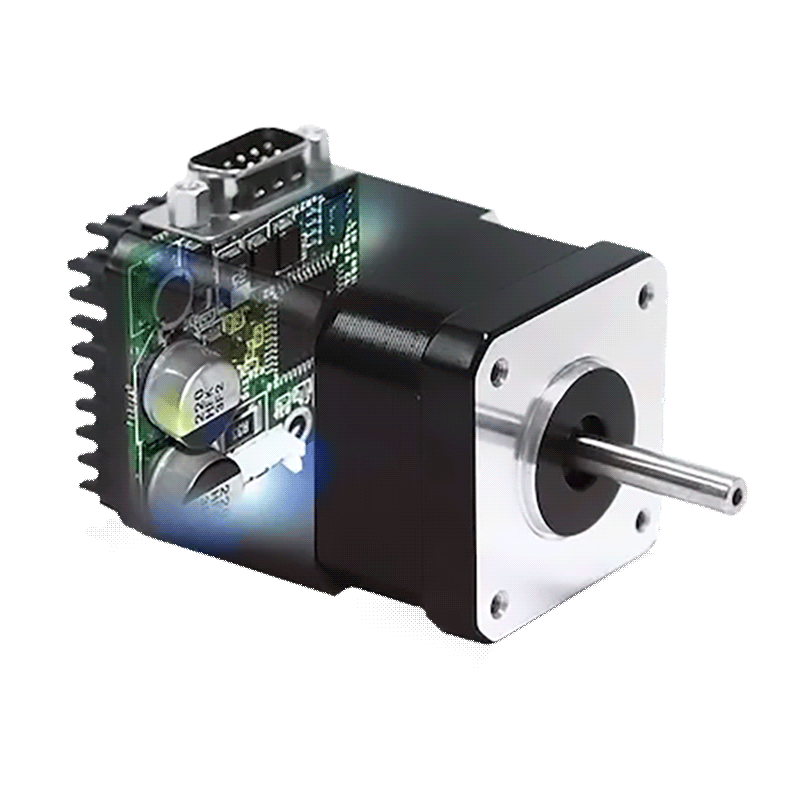
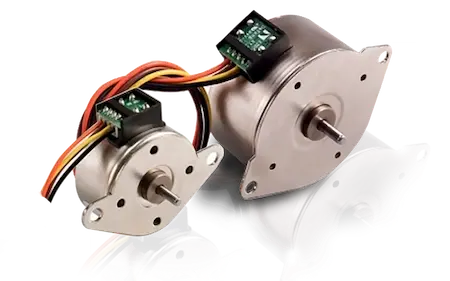
The rotor of a stepper motor contains permanent magnets, arranged either as individual magnet segments or as pole pairs. The stator consists of several windings arranged in a ring and grouped into phases. These phases are energized sequentially, creating changing magnetic fields. The interaction of attraction and repulsion between these fields causes the rotor to move in incremental circular steps.
The motor controller determines the sequence in which the phases are energized. Each electrical pulse causes the motor shaft to rotate by a fixed step angle. Only after a complete sequence of all individual steps is a full revolution completed and the starting position reached.
In addition to conventional full-step operation, finer control is also possible. Instead of abruptly switching the phases on and off, the current flow is regulated in gradual intermediate values. This allows the rotor to move in partial steps or microsteps between the phases. This operating mode provides smoother motion and enables particularly precise positioning.
Because the rotor responds almost without delay to changes in the magnetic fields, the motor’s full performance is available immediately after switching on. This makes stepper motors highly suitable for applications requiring fast and frequent changes in direction.
Do you have any questions or would you like some advice?
Please feel free to send us your technical requirements or questions in writing using the contact form linked below. We will get back to you as soon as possible after receiving your enquiry.